Healthy Hair Tips
I spent 16 years as a professional South Asian bridal hair and makeup artist. Sixteen years of touching, styling and working with every hair type imaginable.
I’ve seen hair so damaged it practically crumbled in my hands and I’ve seen hair so gorgeously healthy it made me want to cry (pregnancy hormones did not help with that, by the way).
And here’s what I learned…healthy hair isn’t rocket science but it does require you to stop doing some truly terrible things to it. These are the healthy hair tips that actually made the biggest difference, no gimmicks required.
I’m writing this as someone who’s currently wrangling four kids aged 5 to 18, trying to build online businesses and occasionally remembering to brush my own hair before 2pm.
So this isn’t going to be one of those “wake up at 5am for your 47-step hair routine” situations.
This is real life advice for real people with actual responsibilities.
Disclaimer: This post contains affiliate links. If you purchase through these links, I may earn a small commission at no extra cost to you.
Why I’m Qualified to Talk About This
Let me establish my credentials beyond “person with opinions on the internet.” I worked in the beauty industry for over 16 years, specialising in South Asian bridal hair and makeup.
I also have my hairdressing qualification and trained as a lash tech. I’ve worked on hundreds of brides, dealt with every hair concern you can imagine and learned what actually works versus what’s just marketing nonsense.
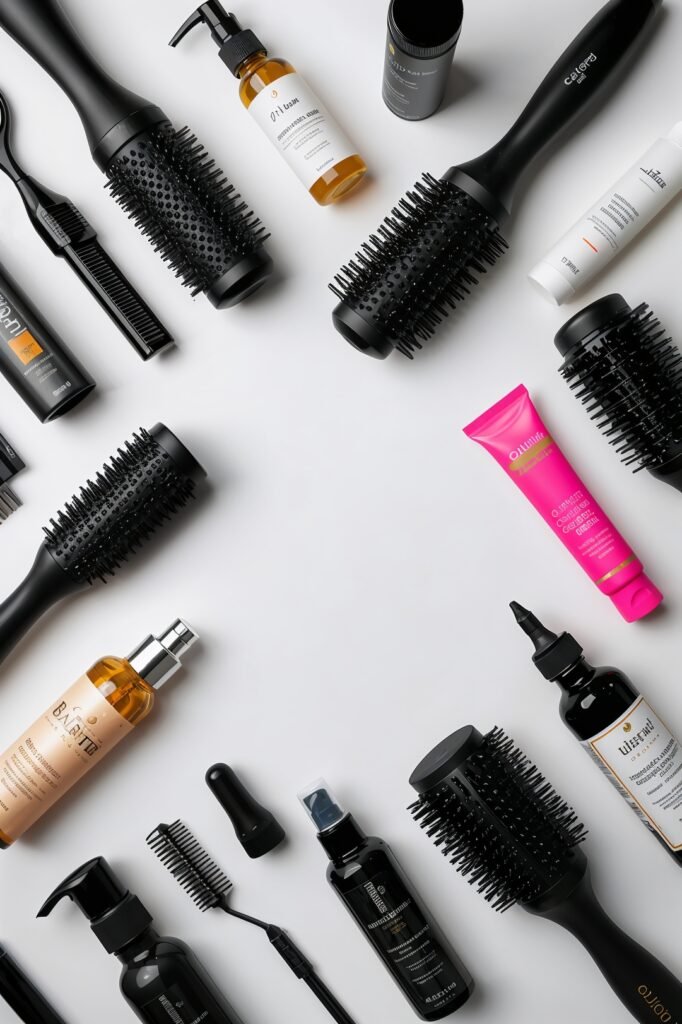
The Harsh Truth About Hair Damage
Let’s start with some brutal honesty: most of you reading this are probably damaging your hair and don’t even realise it. I did it for years. We all do.
Here’s a personal story that still makes me cringe. Back in 2015, I was doing back-to-back wedding season…sometimes three brides a weekend during peak season.
My own hair? Absolute disaster. I was so focused on making everyone else look gorgeous that I was straightening my hair every single day, barely conditioning it and wondering why it felt like crispy noodles.
One day, my then-10-year-old daughter (she’s 16 now) asked me, “Mummy, why does your hair look dead but all the brides have princess hair?” That stung. But she wasn’t wrong.
The truth is, healthy hair starts with stopping the damage.
Revolutionary concept, I know. But seriously, you can slap all the expensive treatments in the world on damaged hair, and it’ll still be damaged. It’s like trying to fix a leaking roof with prettier tiles…you’ve missed the actual problem.
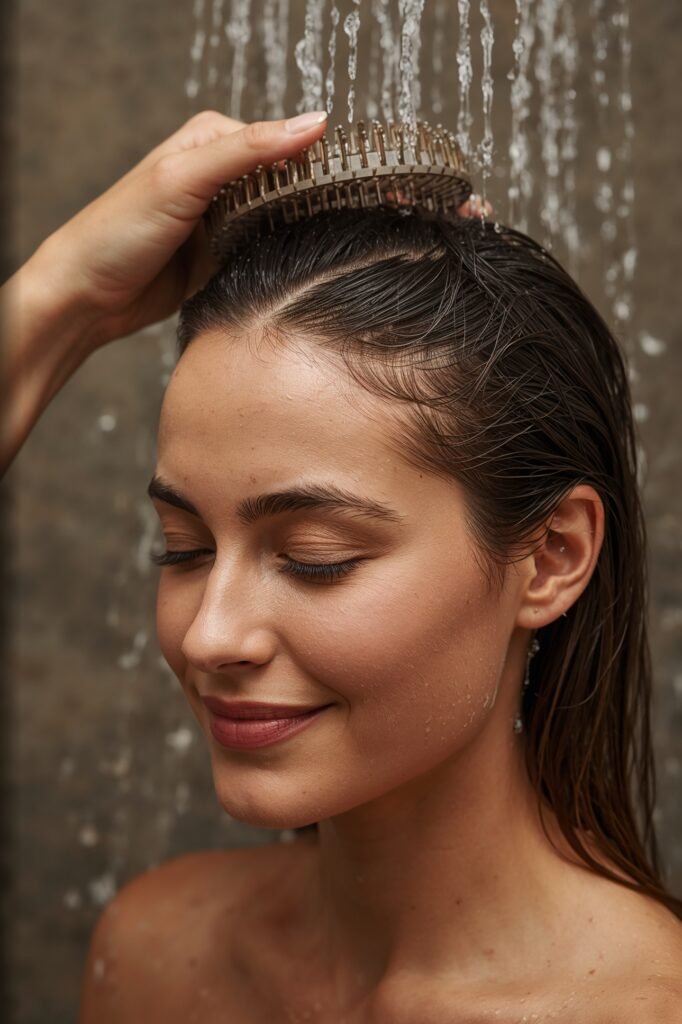
What Actually Damages Hair?
The Real Culprits
Heat Styling Without Protection
This is the big one.
Every single day I worked with brides who used straighteners daily without heat protectant. That’s essentially frying your hair at 200°C with nothing between it and direct heat. Would you put your hand on a hot pan with no protection?
No?
Then why are you doing it to your hair?
When I finally invested in a proper heat protectant spray Heat protector spray and actually used it consistently, the difference was night and day.
My hair stopped breaking as much, the ends didn’t look as crispy and it actually held styles better.
Over Washing
I’m Bengali and in Bengali culture, there’s this thing about oiling your hair before washing. My mum used to do it, my grandmother did it. I thought it was old fashioned nonsense.
Turns out, they were onto something.
Washing your hair every single day strips it of natural oils. Your scalp then goes into panic mode and produces even more oil to compensate, which makes you want to wash it more, which creates this vicious cycle. I went from washing daily to washing 2-3 times a week and my hair is actually less greasy now.
Makes no sense, but it works.
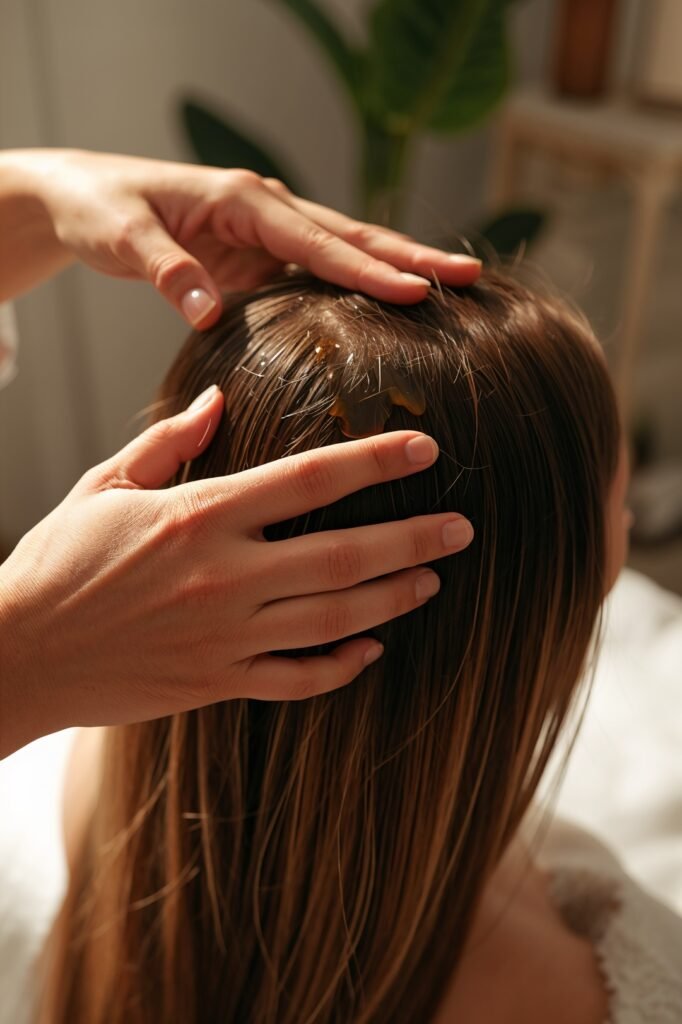
Chemical Treatments Without Proper Care
I’m not saying don’t colour your hair or get treatments.
I’ve done it all..highlights, balayage, keratin treatments, the lot.
But if you’re getting chemical treatments and then not following proper aftercare, you’re wasting your money and destroying your hair.
I learned this the hard way when I decided to go lighter for a wedding expo back in 2018. Beautiful colour, absolutely fried hair.
I had to cut off about four inches because it was so damaged. Could’ve been avoided if I’d used the proper Colour safe shampoo and conditioner my stylist recommended instead of continuing with my regular £3 supermarket shampoo.
Tight Hairstyles
This one’s particularly relevant if you’re wearing hijab or doing a lot of updos. Traction alopecia is real, and I’ve seen it happen to clients who constantly wore tight ponytails or buns. Your hairline can literally recede from the constant pulling.
As someone who spent years doing elaborate bridal updos, I always tried to balance security with not pulling too tightly. Your hair shouldn’t hurt when it’s styled. If it does, it’s too tight.
What Doesn’t Actually Damage Hair (Despite the Fear-Mongering)
Sulfates in Reasonable Amounts
The internet will have you believe sulfates are the devil. They’re not. They’re cleansing agents. Yes, sulfate-free shampoos can be gentler, but unless you have severely damaged or colour-treated hair, regular sulfate shampoos used in moderation are fine.
I spent a fortune on sulfate-free everything before realising my hair was actually fine with regular shampoo when I used it less frequently.
Brushing Your Hair
You’ve probably heard you shouldn’t brush your hair when wet. Partially true, you shouldn’t yank a paddle brush through soaking wet hair like you’re trying to remove tree bark. But gently detangling with a wide-tooth comb or a proper wet brush Wet Detangling Brush is absolutely fine and prevents more damage from trying to brush out massive tangles later.
My Current Hair Routine
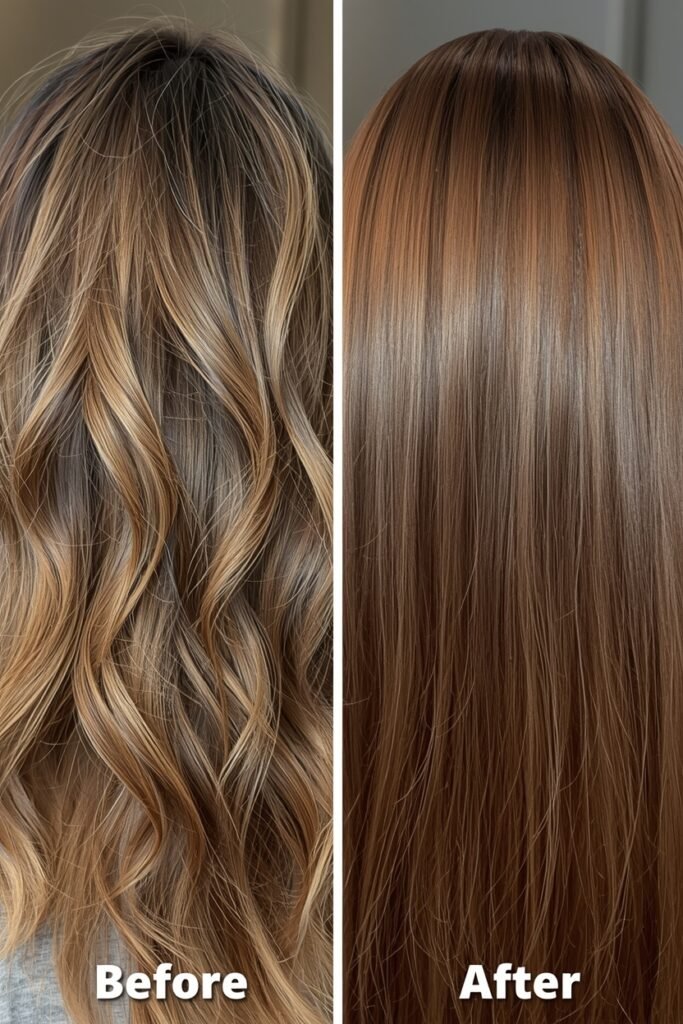
Alright, so here’s what I actually do now that I have more time to focus on my own hair:
Weekly Schedule
Monday/Thursday: Wash Days
I wash twice a week, sometimes three if I’ve been particularly active or it’s summer and disgustingly humid (love you, London weather). I use a Clarifying Shampoo once a week to remove buildup and a Moisturizing Shampoo for the other wash.
Here’s a tip from my professional days: focus the shampoo on your scalp, not your lengths. Your scalp is what gets oily and dirty. Your lengths will get cleaned from the runoff, and you won’t strip them of moisture.
Conditioning
I condition from mid-length to ends. Never the roots unless you love the greasy look. Leave it in for at least 3-5 minutes. I usually use this time to, you know, actually enjoy my shower before someone inevitably starts banging on the door asking where their football kit is.
I use a regular Daily Conditioner every wash and a deep conditioning mask Deep Conditioning Mask once a week.
Sunday: Oil Treatment
Remember when I said my mum’s oiling routine was onto something? I do a warm oil treatment once a week. I use coconut oil or almond oil Hair Oil Blend, massage it into my scalp and through my hair, leave it for at least an hour (sometimes overnight if I’m feeling fancy), then wash it out.
This isn’t some miracle cure, but it does help with moisture and my scalp health. Plus, there’s something quite meditative about the ritual. It’s probably the only hour in my week where I’m not thinking about what needs doing or who needs feeding.
Daily Maintenance
Morning
I brush my hair with a boar bristle brush Boar Bristle Brush to distribute natural oils. Takes two minutes. Sometimes I remember, sometimes I don’t. We’re keeping it real here.
Night
If I remember (big if), I’ll put my hair in a loose braid before bed. Silk pillowcase Silk Pillowcase also helps reduce friction and breakage. I bought one after a client told me about them, and honestly, it’s one of those small things that makes a difference.

Heat Styling
I’ve massively reduced heat styling. When I do use heat (maybe once or twice a month now), I:
- Apply heat protectant spray
- Use the lowest temperature that still works
- Don’t go over the same section repeatedly
Back in my bridal days, I was heat styling constantly. Now? I embrace my natural texture most days. It’s actually quite liberating. Plus, my 6-year-old thinks my natural waves are “princess hair,” so I’ll take that win.
Hair Health and Lifestyle (The Stuff Nobody Wants to Hear)
Here’s where I’m going to sound like your mum, but stick with me.
Diet and Hydration
Your hair is dead protein. But it grows from your scalp, which is very much alive and affected by what you eat. When I was working crazy hours during wedding season, surviving on caffeine and whatever food I could grab between clients, my hair suffered. It was limp, broke easily, and just looked… sad.
Since focusing more on nutrition (and actually having time to eat proper meals now I’m not doing back-to-back bridal appointments), my hair’s improved.
I’m not saying you need to become a health nut, but protein, iron, and vitamins do matter.
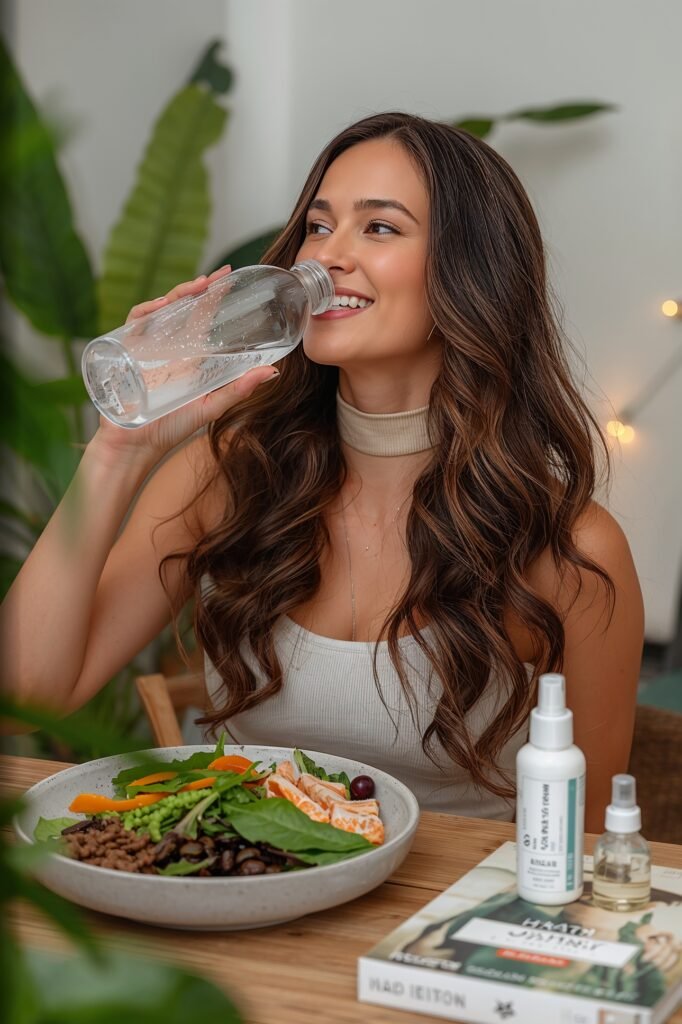
Also, drink water. I know, revolutionary advice. But seriously, I got a massive Water Bottle and just keeping it with me means I actually drink enough water now. My hair is shinier, my skin is clearer, and I have more energy. Groundbreaking, I know.
Stress Management
After my father passed away in 2022, my hair started thinning. Just… falling out in concerning amounts.
I can’t tell you to just “not be stressed” because that’s ridiculous advice, especially when you’re juggling four kids, building businesses, and dealing with life.
But I can tell you that finding small ways to manage stress helps.
For me, it’s organising (yes, I’m that person who finds decluttering relaxing), minimal planning to reduce chaos, and occasionally locking myself in the bathroom with a cup of tea for five minutes of peace.
My hair did recover once my stress levels stabilised, but it took about six months. Hair doesn’t operate on our preferred timeline, frustratingly.
Sleep
Get enough sleep. I know, I’m hilarious. With four kids, “enough sleep” is a mythical concept. But when I do manage a decent night’s sleep (or even just a few nights in a row), my hair looks better. It has more shine, less breakage, and generally behaves better.
Hair grows and repairs during sleep. When you’re constantly sleep-deprived (hello, every parent ever), that repair process is compromised.
Special Considerations for Different Hair Types
If You Wear Hijab
I’ve worked with so many hijabi brides over the years, and scalp health is crucial. Your hair is covered most of the time, which means less air circulation.
Make sure you’re:
- Keeping your scalp clean
- Not tying your hair too tightly under your hijab
- Letting your hair breathe when you’re at home
- Using a silk or satin hijab cap to reduce friction
If You Have Textured or Curly Hair
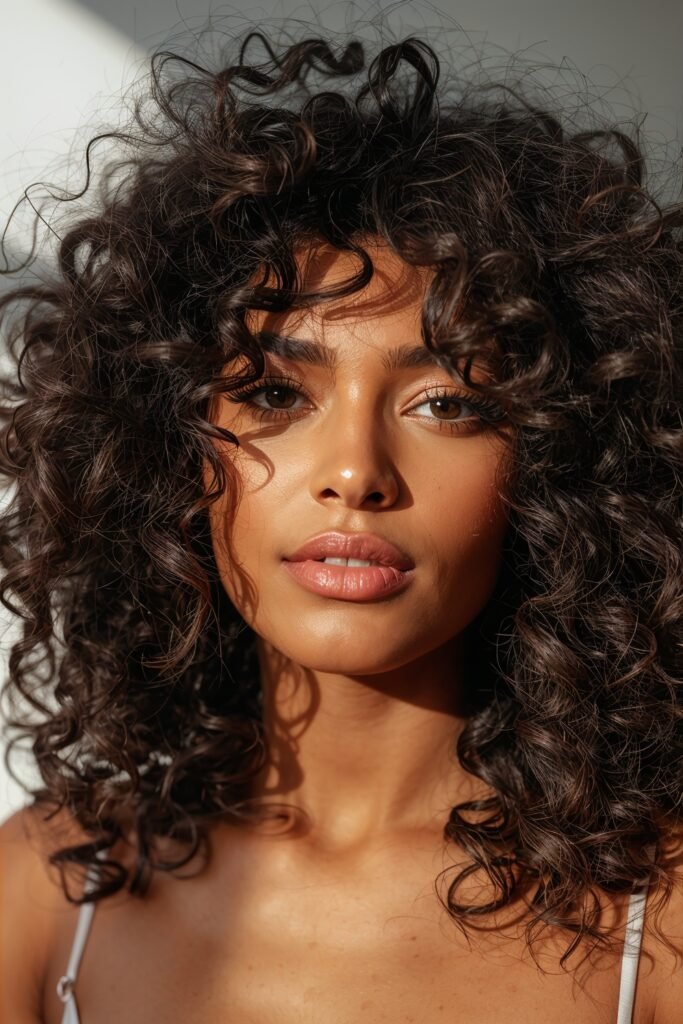
Everything I’ve said applies, but you need to focus even more on moisture. Textured hair is naturally drier because the oils from your scalp have a harder time traveling down the hair shaft.
Deep conditioning isn’t optional – it’s essential. And please, for the love of everything holy, use a proper Leave-in Conditioner and stop brushing your hair dry. That’s a one-way ticket to breakage city.
If You Colour Your Hair
I get it, grey coverage is real. But colour-treated hair needs extra care. Use products designed for colour-treated hair, reduce heat styling, and please use that Purple Shampoo if you’ve got blonde in your hair. Nobody needs brassy, damaged hair.
Products Actually Worth Your Money
Let me be straight with you: expensive doesn’t always mean better. But some products are worth the investment.
Worth It:
- A good heat protectant spray
- Quality deep conditioning treatment
- Silk or satin pillowcase
- Proper hair scissors for trimming
- A gentle, detangling brush
Not Worth It:
- £50 shampoos (unless you have very specific needs)
- Most hair supplements (just eat properly)
- Fancy hair towels (a cotton t-shirt works just as well)
- Products claiming to “repair” split ends (they don’t – only cutting does)
When to See a Professional
Look, I’m all for DIY and saving money. But sometimes you need professional help:
- If your hair is falling out in unusual amounts
- If you have persistent scalp issues (itching, flaking, pain)
- If you’re dealing with significant damage from chemical treatments
- If you want major colour changes
I learned when to pass clients to trichologists (hair and scalp specialists) during my career. There’s no shame in admitting you need expert help.
Over to You
I’d love to hear about your hair health journey! What’s worked for you? What’s been a complete disaster? Are you team natural oils or team modern products? Drop a comment below and let’s chat.
And if you found this helpful, share it with another tired mum who’s wondering why her hair doesn’t look like the Instagram ads promise. We could all use a reality check and some practical advice.
Here’s to healthy hair, realistic expectations, and not taking it all too seriously. We’ve got enough to stress about without adding our hair to the list.
Related Posts
If you enjoyed this, you’ll love these too: