
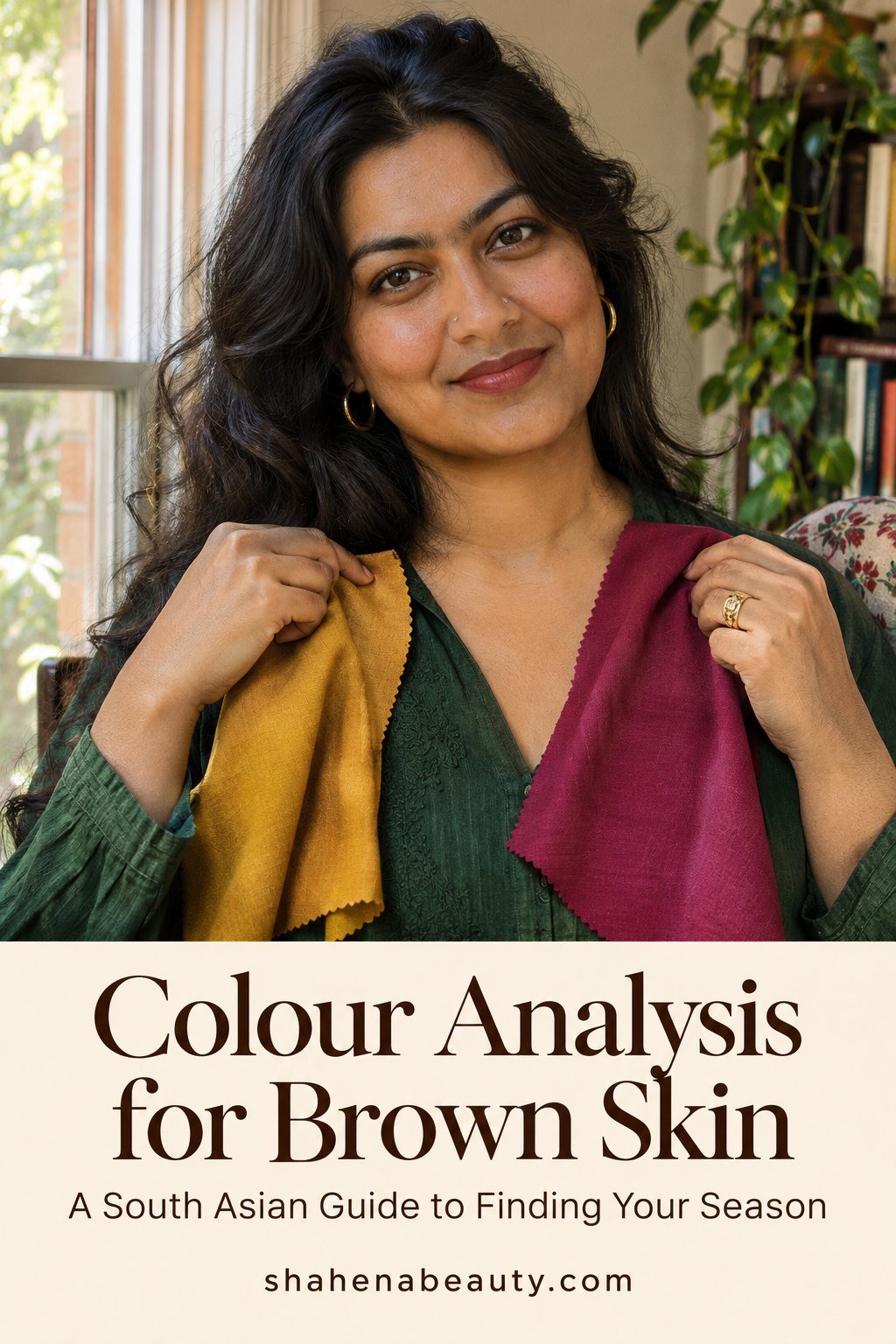
Colour Analysis for Brown Skin: How to Find Your Season If You’re South Asian
Be honest. How many times have you been told “you’re desi, so you’re warm, just wear gold and orange”? Same. And how many times have you put on the mustard kameez everyone swore would suit you, then looked at the photos and thought you looked like you hadn’t slept in a week?
I spent over 16 years doing South Asian bridal hair, makeup and henna, and I saw this all the time. Gorgeous women in the wrong colours, wondering why their skin looked grey or yellow in pictures. Most colour analysis online was made with pale skin, light hair and blue eyes in mind. Put dark hair and dark eyes into those quizzes and you get shoved into Autumn and left there.
So today I’m showing you how colour analysis for brown skin actually works. You’ll learn how to find your real undertone, why olive skin confuses everything, which of the 12 seasons are most common in South Asian skin and how to use your colours for Eid, weddings and your hijab collection. Grab a mirror, sit by a window and let’s find your colours.
Quick note: this post includes a link to my own digital product, The Desi Colour Code. I only share things I genuinely believe in.
Want to find your season tonight?
The Desi Colour Code is my colour analysis kit made for South Asian skin, with printable drape cards, selfie face frames and all 12 season palettes.
Get The Desi Colour Code →Instant digital download. No physical product is sent.
What Is Colour Analysis and Why Does It Get Brown Skin Wrong?
You know that one outfit that makes everyone ask if you’ve had a facial? That’s colour analysis in action. Colour analysis (or color analysis, if you’re searching on Pinterest) is simply finding the colours that sit in harmony with your natural skin, hair and eyes. The right colours make your skin look even and glowy. The wrong ones pull out shadows, redness and dark circles.
Seasonal colour analysis sorts everyone into 12 seasons based on four things: your undertone, how deep your colouring is, whether bright or soft colours suit you, and how much contrast you have. Sounds simple, right? Here’s where it falls apart for brown skin:
- It mixes up skin colour and undertone. Brown skin can be warm, cool or neutral. Being desi does not automatically make you warm.
- It leans on hair and eye colour. Western systems use blonde vs brown hair and blue vs brown eyes. When nearly all of us have dark hair and dark eyes, that tells you nothing.
- The vein test doesn’t work well on us. Veins are harder to read through melanin rich skin and often look green on everyone.
- Olive skin gets ignored completely. And loads of South Asian women are olive.
Shaz’s tip: Stop asking “what colour is my skin?” and start asking “how does my skin react to this colour?” That one switch changes everything.
Overtone vs Undertone: The Bit Nobody Explains
Here’s the secret most colour analysis guides skip. Your overtone is the colour people see: light, medium, brown, deep. It changes when you tan, after summer or with pigmentation. Your undertone is the colour underneath, and it never changes. It’s warm (golden, peachy), cool (pink, rosy, blue) or neutral (a mix of both).
Do these tests in daylight with a bare face and your hair wrapped in a white towel or a white underscarf.
1. The gold vs silver test
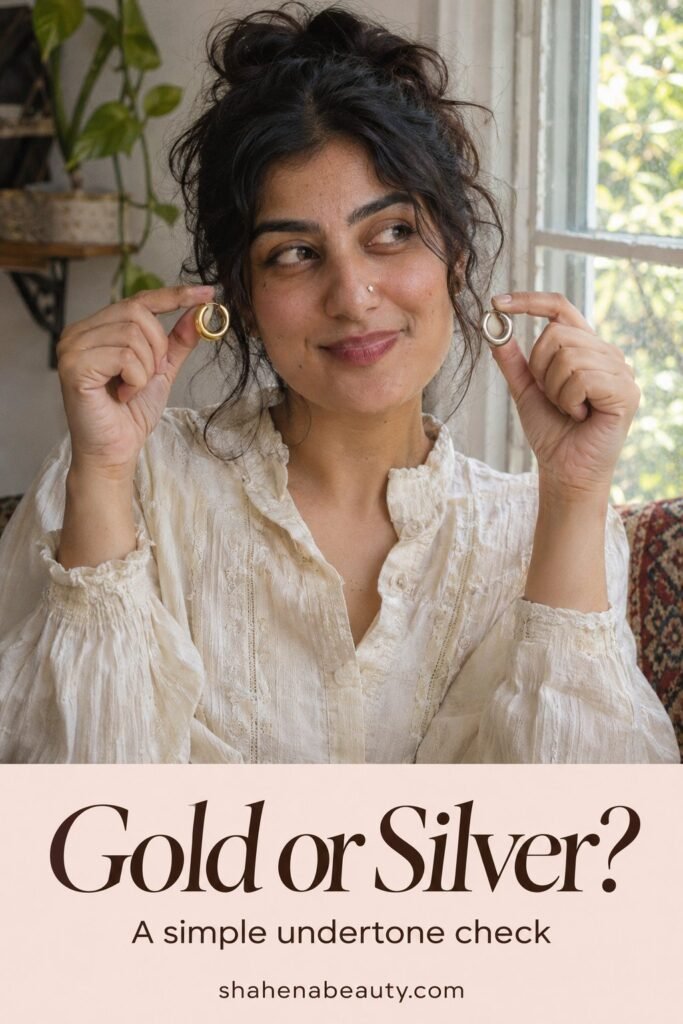
Hold a gold piece and a silver piece of jewellery under your chin, one at a time. If gold makes your skin look warm and lit up, you lean warm. If silver makes you look clearer and brighter, you lean cool. If both look lovely, you’re probably neutral.
2. The cream vs pure white test
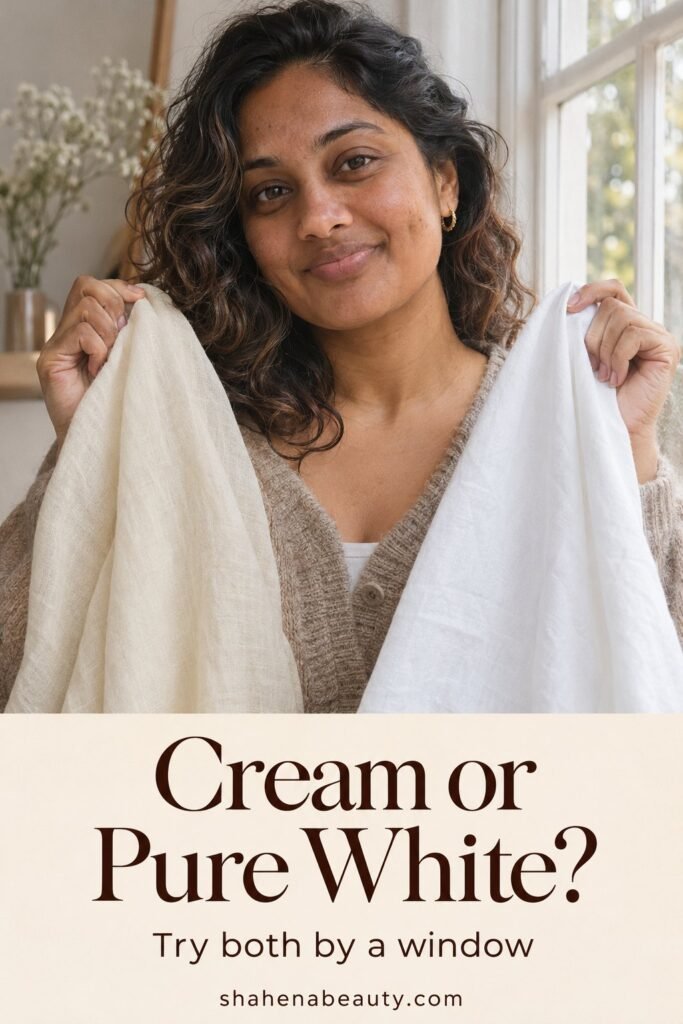
Hold a cream scarf, then a bright white one, under your chin. Cream looking softer and kinder means warm. Bright white looking fresh while cream looks a bit dirty means cool.
3. The peach vs pink test
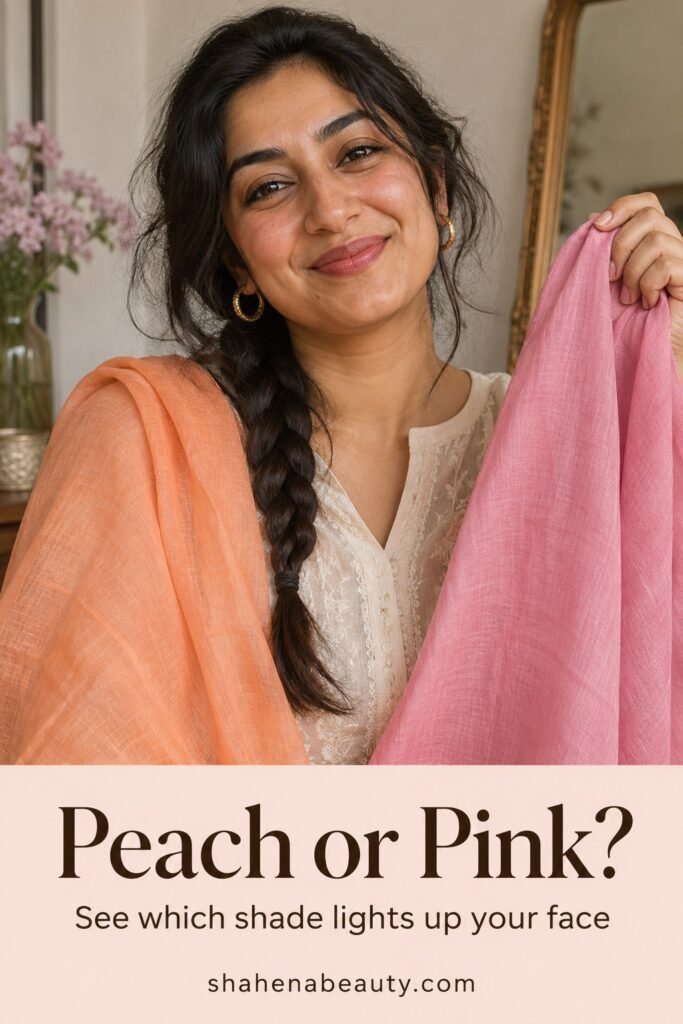
This one is my favourite for brown skin. Peach making you look healthy while pink looks harsh means warm. Pink making you look rosy while peach turns you orange or sallow means cool.
4. Skip the vein test
Honestly, on brown skin it causes more confusion than it solves. Trust the three tests above instead.
Shaz’s tip: Switch quickly between the two colours and watch your jawline and under your eyes, not the fabric. The difference is most obvious in the first second.
Olive Skin: Why Your Foundation Never Matches
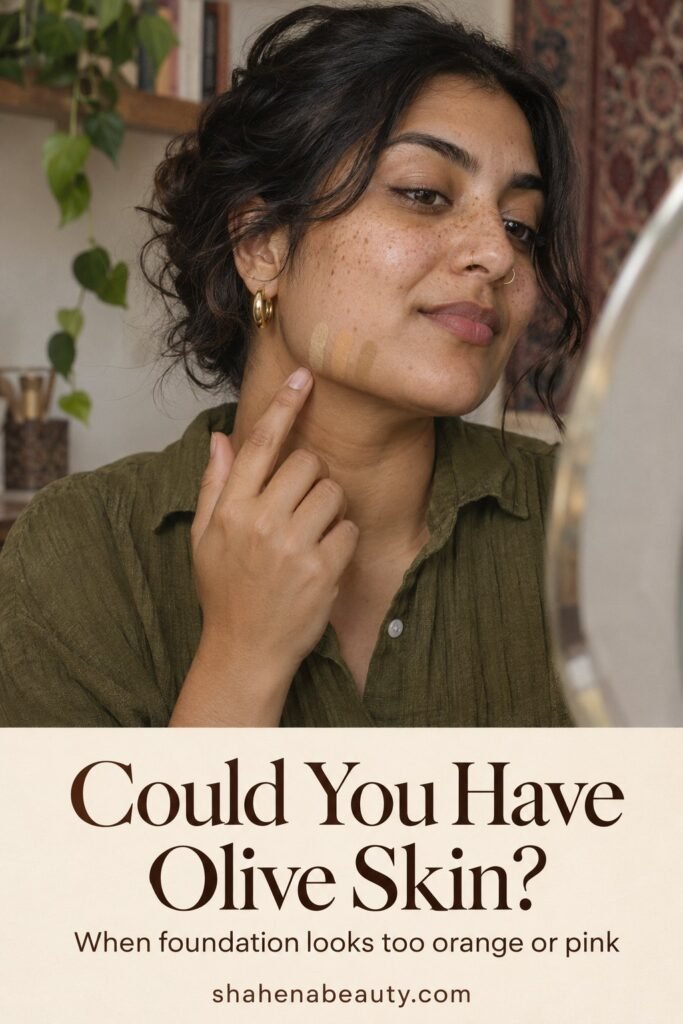
If every foundation you’ve ever bought has looked either too orange or too pink, babe, you might be olive. Olive skin has a slightly green or grey cast sitting on top of a warm or neutral base. It’s really common in South Asian skin, and it’s the reason so many of us struggle with shade matching.
Signs you might have olive skin:
- Yellow foundation looks sallow and pink foundation looks ashy on you
- Your skin looks slightly green or grey in shadows, around the mouth or under the eyes
- Olive green and khaki look surprisingly good on you
- You get told you look “tired” in pastels
Olive skin usually behaves as neutral to warm in colour analysis, and it often falls into the softer or deeper seasons. If you want to go deeper on base products, my guide to colour correctors for South Asian skin covers how to cancel out that grey cast.
Shaz’s tip: When shade matching, look for foundations labelled “olive” or “neutral” and swatch three stripes on your jawline, then check them by a window after ten minutes. My foundation guide for South Asian skin has shade picks to try.
Depth, Clarity and Contrast on Brown Skin
Once you know your undertone, you’re halfway there. Now it’s time for the three things that decide which season you actually are.
Depth: light, medium or deep
Depth is about your whole look, not just your skin. Black hair and dark eyes add depth even to lighter skin. Hold a chocolate brown fabric and then a camel one under your chin. If chocolate holds its own and your face looks defined, you’re deep. If dark colours swamp you and pull shadows under your eyes, you’re lighter.
Clarity: bright or soft
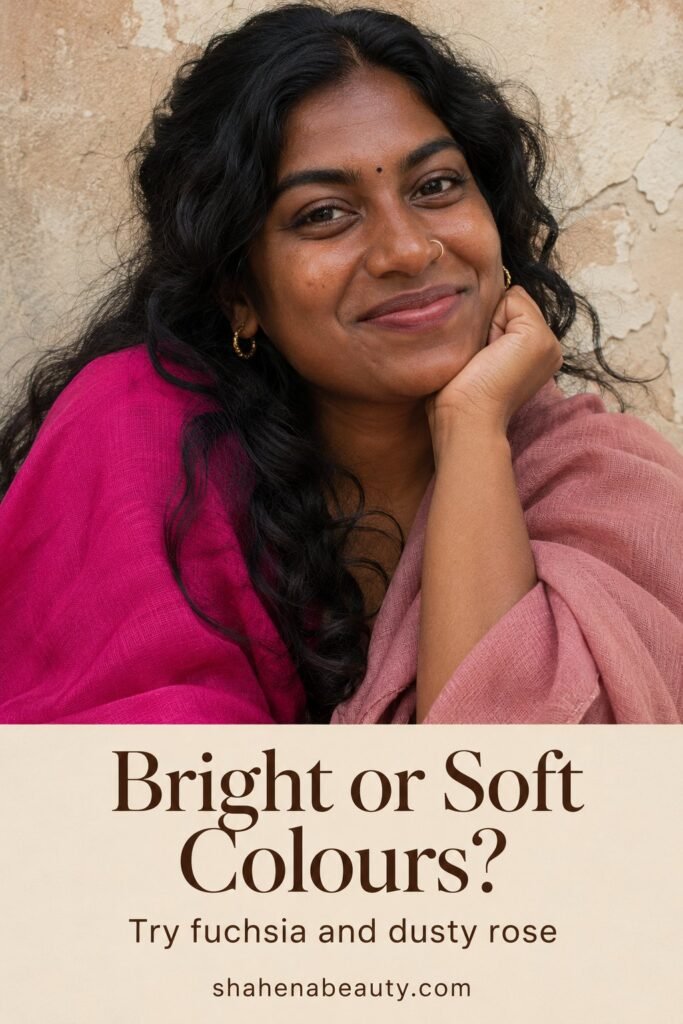
This is the test most desi women never get told about, and it’s often the one that unlocks everything. Compare hot pink with dusty rose, or cobalt blue with dusty blue. If the bright version makes your eyes sparkle, you’re bright. If the bright version arrives before you do and people notice the outfit instead of your face, you’re soft.
Contrast: the black and white photo trick
Take a daylight selfie, then turn it black and white in your phone editor. Look at the gap between your skin and hair. A big jump from light grey to black is high contrast. Dark grey to black is low to medium contrast, which is why deep skin with black hair looks stunning in rich, tonal outfits.
Shaz’s tip: Rate each test out of five for how obvious it was. Your highest score is your dominant trait, and that’s the key to your season.
The 12 Seasons and Which Are Most Common in South Asian Skin
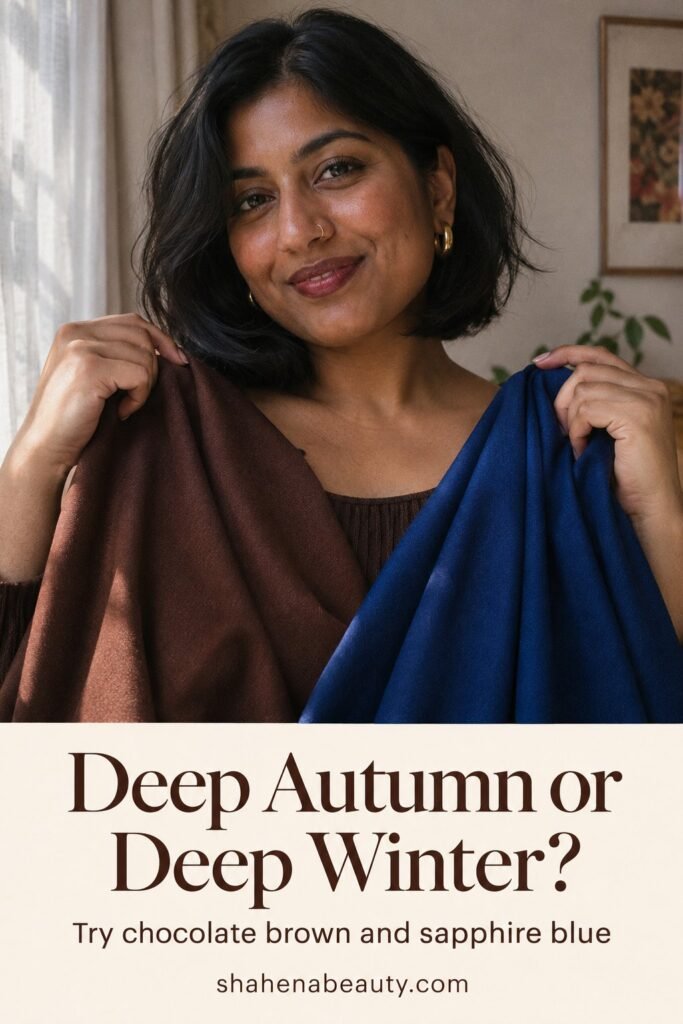
You can be any of the 12 seasons, but some come up far more often in South Asian skin than others. Here are the five I’d try first, with a peek at each palette.
Deep Autumn: dark, warm and rich
Think spice market at dusk. Chocolate, paprika, saffron, bottle green and garnet. Gold jewellery makes you glow and pastels make you look tired. This is one of the most common seasons for medium to deep South Asian skin with warm or olive undertones.
Deep Winter: dark, cool leaning and clear
Velvet and jewels. Emerald, sapphire, ruby, plum and true black. Many desi women with neutral to cool skin are Deep Winters even though they’ve been told to wear orange their whole lives. If mustard makes you look sallow, look here.
True Autumn: warm and earthy
Turmeric, cinnamon and golden hour. Rust, marigold, olive and warm teal. Orange red lipstick looks natural on you and 22 carat gold is your best friend.
Soft Autumn: warm, muted and gentle
Chai with cardamom. Sage, dusty coral, mushroom and soft teal. Bright colours make your face disappear and black can look harsh, but soft earthy shades make you look expensive.
Bright Winter: clear, cool leaning and vivid
Bollywood colour at full volume. Rani pink, cherry red, emerald and cobalt. Lots of Bright Winters think they’re Autumn because they’ve always worn gold. If hot pink gets you the most compliments, this could be you.
The Spring and Summer seasons (Light Spring, True Spring, Bright Spring, Light Summer, True Summer and Soft Summer) are less common in South Asian skin, but they absolutely exist, especially with lighter skin or softer brown hair.
Shaz’s tip: Hold up a colour from two different seasons side by side. The one that makes you look rested without makeup is your winner.
How to Do Colour Analysis at Home, Step by Step
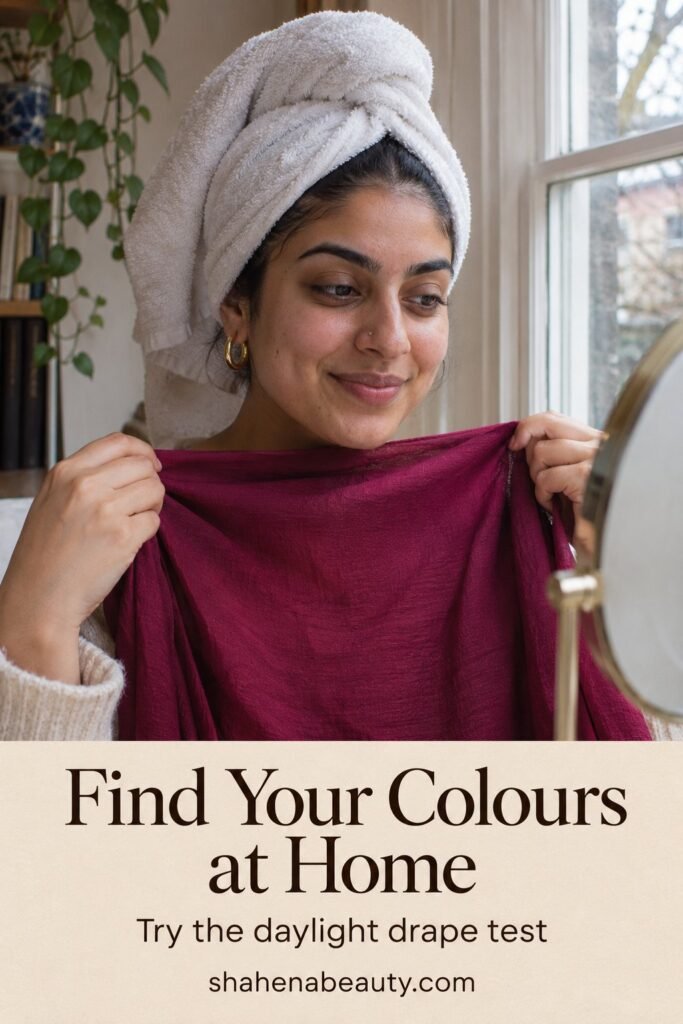
Ready to try it yourself? Here’s exactly how I’d do it with a client, minus the expensive studio.
- Sit facing a window in daylight, ideally late morning. No ring lights or yellow bulbs.
- Take off all makeup, coloured lenses and jewellery.
- Wrap your hair in a white towel or wear a white underscarf.
- Do the undertone tests: gold vs silver, cream vs white, peach vs pink.
- Do the depth, clarity and contrast tests and score each one out of five.
- Find your dominant trait and second trait, then match them to a season.
- Test your top two seasons with real fabrics or colour frames and pick the winner.
- Take photos of every test so you can compare side by side afterwards.
Shaz’s tip: Bring a friend or your sister. A second pair of eyes is brilliant for spotting which colour makes you look tired.
Do it properly with the full kit
Printable drape cards for every test, 30 face frames to use with a selfie, a Season Finder and full profiles for all 12 seasons, written for brown skin.
Shop The Desi Colour Code →Instant digital download. No physical product is sent.
Using Your Colours for Desi Outfits, Bridal Reds and Hijabs
This is where colour analysis gets really fun. Once you know your season, Eid shopping (and your Eid makeup look), wedding outfits and your hijab collection all get so much easier.
Which bridal red suits you
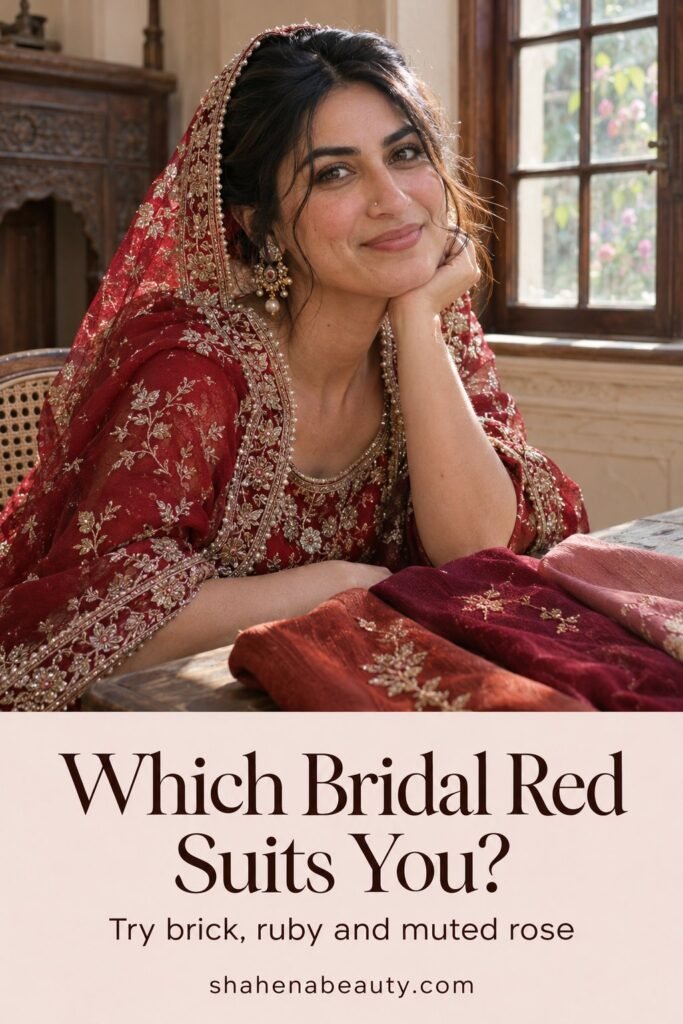
Not all reds are equal. The wrong red can make a bride look tired in photos. Warm Autumns suit orange red, brick and rust. Winters suit true red, cherry and ruby with a slight blue base. Soft seasons look beautiful in muted rose reds, and the Light seasons suit coral red or blush. For the full bridal look, see my South Asian bridal makeup guide. Match your lipstick too, my guide to bridal lipsticks for South Asian skin has shade picks.
Gold, silver or both
Warm seasons glow in yellow and antique gold, kundan and temple jewellery. Cool seasons look polished in silver jadau, diamonds and white gold. Soft seasons suit rose gold and matte finishes. Love gold but you’re a cool season? Pick polished gold with diamonds or emeralds and you’re sorted.
Hijab colours by season
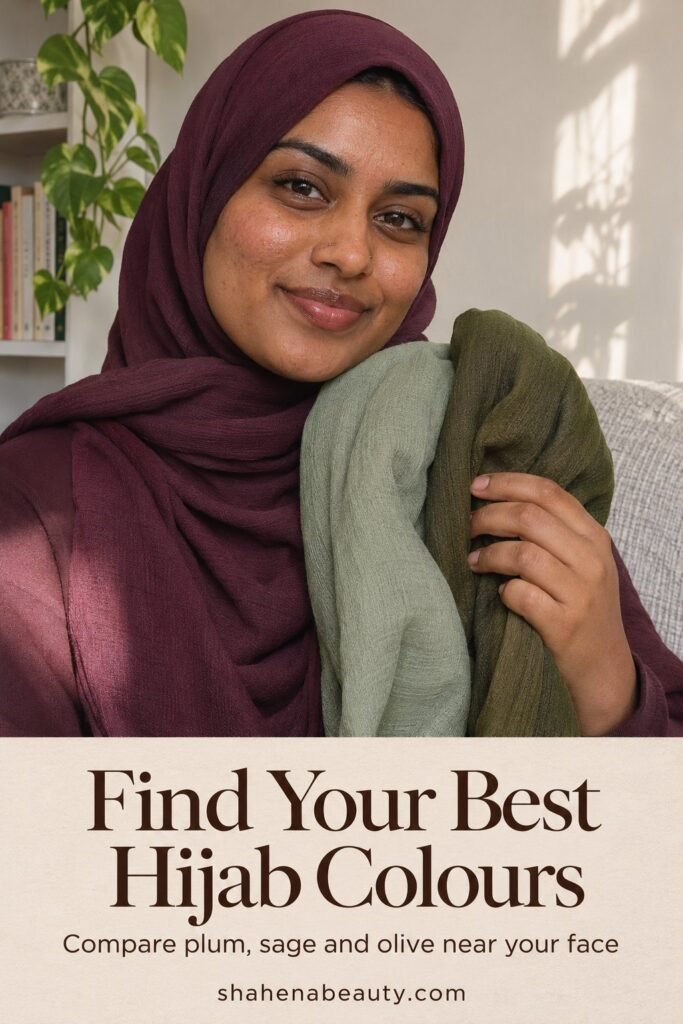
Your hijab sits right around your face, so it’s the most important colour you wear. Deep Autumns suit chocolate, olive and bottle green. Deep Winters suit black, navy, emerald and plum. Soft Autumns suit sage, mushroom and dusty coral. Bright Winters suit black, fuchsia and cobalt. For bridal looks, see my stunning hijab bridal styles, and my tips on keeping your hijab in place all day.
Shaz’s tip: Build a starter set of five hijabs in your season: one neutral, one deep shade, one soft shade, one bright and one that matches your favourite abaya.
Colour Analysis for Brown Skin: Your Questions Answered
What season are most South Asian people in colour analysis?
Deep Autumn and Deep Winter are the most common, followed by True Autumn, Soft Autumn and Bright Winter. That said, South Asian skin can fall into any of the 12 seasons, so always do the tests rather than assuming.
Can brown skin be cool toned?
Yes, absolutely. Brown describes your overtone, not your undertone. Plenty of South Asian women have cool or rosy undertones, and they look amazing in jewel tones, silver and blue based reds.
Is colour analysis accurate for dark skin?
It can be, as long as the method focuses on how your skin reacts to colour rather than your hair and eye colour. Traditional quizzes built for fair skin often get darker skin wrong, which is why testing with real colours matters.
What colours suit olive skin?
Olive skin usually suits muted, earthy and rich colours like olive green, khaki, teal, terracotta, chocolate and soft gold. Very icy pastels and neon brights often make olive skin look sallow.
Can I do colour analysis at home for free?
Yes. Use daylight, a bare face, white fabric around your hair and items from your wardrobe in gold, silver, cream, white, peach and pink. A kit with drape cards and face frames just makes it quicker and more accurate.
Does my season change if I tan?
No. Tanning changes your overtone, but your undertone stays the same, so your season stays the same too. You might just sit at the deeper end of your palette in summer.
Find Your Colours and Wear Them With Confidence
You deserve to look in the mirror and see yourself glowing, not tired. Colour analysis for brown skin isn’t about rules, it’s about knowing which colours work hardest for you, so you can shop smarter and feel amazing at every Eid, mehndi and wedding.
If you want everything done for you, The Desi Colour Code has the tests, the printables, the face frames and all 12 season palettes in one download. And if you find your season, come and tell me in the comments. I’d love to know!
Get The Desi Colour Code
Colour analysis made for South Asian skin. Instant download, use it tonight.
Shop the kit →Instant digital download. No physical product is sent.

5 Comments